Journal
What is Reformer Pilates? A Complete Beginner's Guide
By Veda Pilates · 23 October 2026 · 11 min read
New to Pilates? Our complete beginner's guide explains what Reformer Pilates is, how the machine works, its benefits, and what to expect in your first class.
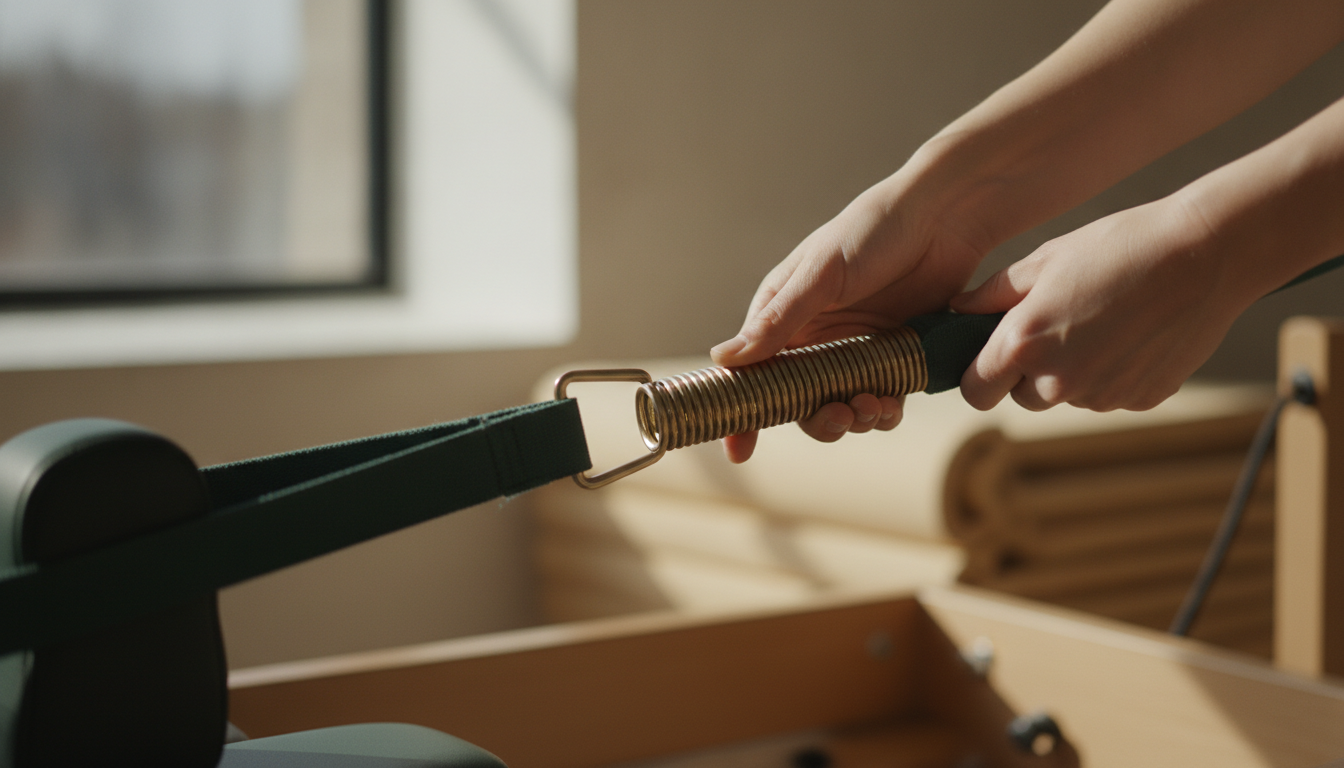
Reformer Pilates is a full-body exercise method that uses a specific piece of equipment called a reformer. This machine uses a system of springs, straps, and a sliding carriage to provide resistance and support, allowing for a highly effective, low-impact workout. It focuses on building core strength, improving posture, increasing flexibility, and creating balanced muscle tone throughout the body.
Unlike workouts that isolate specific muscles, Reformer Pilates integrates the entire body, emphasizing controlled, precise movements and proper alignment. The adjustable nature of the reformer makes it an excellent choice for everyone, from absolute beginners to seasoned athletes.
What is the Pilates Reformer Machine? A Detailed Breakdown
At first glance, the reformer can look intimidating. It resembles a bed frame with a complex system of springs, ropes, and bars. However, every part has a purpose designed to help you move better. Once you understand the components, the machine becomes a versatile and supportive fitness partner.
Here are the main parts of a Pilates reformer and what they do:
| Part | Function |
|---|---|
| The Carriage | A padded platform that slides back and forth on the frame. This is the surface you will sit, lie, kneel, or stand on for most exercises. |
| The Springs | The heart of the machine. These provide resistance. Springs are colour-coded by tension level, allowing the instructor to customize the workout's difficulty. More springs don't always mean harder; sometimes, fewer springs challenge your stability more. |
| The Footbar | An adjustable bar at the end of the reformer. You place your feet or hands on it to push the carriage away. Its position can be changed for different exercises and body sizes. |
| The Straps | Long straps with handles, connected to pulleys at the top of the reformer. You place your hands or feet in them to perform exercises for your arms, legs, and core. |
| Shoulder Blocks | Two padded blocks at the top of the carriage. They keep your shoulders stable and prevent you from sliding off as you push or pull the carriage. |
| The Headrest | A padded support for your head and neck that can be adjusted to be flat or raised. |
This combination of parts allows for hundreds of exercises. The machine can assist you by supporting your body weight, or it can add resistance to challenge your muscles, making it an incredibly adaptable piece of equipment.
How is Reformer Pilates Different from Mat Pilates?
The most common question from beginners is about the difference between Mat and Reformer Pilates. Both are built on the same core principles, but the experience and execution are quite distinct.
Mat Pilates is the foundation of the method, using your own body weight as resistance against gravity. In contrast, the reformer adds external resistance via the springs while also providing support. This support can be invaluable for beginners, as it helps guide the body into proper alignment and makes certain movements more accessible.
For a deeper dive, read our guide on Reformer vs Mat Pilates: Which Should Beginners Start With?, but here is a summary:
| Feature | Mat Pilates | Reformer Pilates |
|---|---|---|
| Resistance | Bodyweight | Adjustable springs |
| Support | Minimal; just the mat | The carriage, straps, and bars provide significant support |
| Exercise Variety | Large number of exercises, with many variations | Even larger range of exercises, including more dynamic and complex movements |
| Feedback | Internal (proprioception) | External (from the machine) and internal |
| Beginner Friendliness | Can be challenging to maintain form | Often easier for beginners to find correct alignment and muscle engagement |
| Cost & Accessibility | Less expensive, can be done anywhere | Requires studio access with specialized equipment |
Neither is inherently 'better'—they are two sides of the same coin. Many practitioners benefit from doing both. However, the reformer's ability to both assist and resist makes it a uniquely effective tool for building strength safely.
The Core Benefits of Reformer Pilates
People are drawn to Reformer Pilates for its wide range of benefits that go beyond just aesthetics. It's a method that builds strength from the inside out.
1. Builds Deep Core Strength Every movement on the reformer is designed to engage your 'powerhouse'—the deep muscles of your abdomen, back, hips, and glutes. A strong core is the foundation for all movement, providing stability for your spine and improving your overall strength.
2. Creates Long, Lean Muscles Pilates focuses on eccentric muscle contractions (the lengthening of a muscle under load), which is key to building toned, strong muscles without bulk. The consistent resistance from the springs challenges muscles through their full range of motion.
3. Improves Posture Dramatically By strengthening your core and back and increasing awareness of your alignment, Reformer Pilates directly counteracts the slouching posture many of us develop from sitting at desks. It teaches you to carry yourself with more poise and less strain. If you have a desk job, you might find our article on how Pilates can fix your posture helpful.
4. Increases Flexibility and Mobility Unlike static stretching, Pilates builds flexibility through movement. The exercises move your joints through a full range of motion, improving mobility and releasing tightness in areas like the hips and shoulders.
5. Low-Impact and Gentle on Joints Most exercises are performed lying down or sitting on the carriage, which removes the stress of gravity and impact from your joints. This makes it an ideal workout for people of all ages, fitness levels, and those recovering from certain injuries (with a doctor's clearance).
6. Enhances Body Awareness The moving carriage and spring tension provide constant feedback, forcing you to be mindful of how you move. This heightened body awareness, or proprioception, translates into better coordination and balance in your daily life.
What to Expect in Your First Reformer Pilates Class
Walking into a studio for the first time can be nerve-wracking. Knowing what to expect can help you feel more confident and prepared.
- The Introduction: Your instructor will show you around the reformer, explaining the basic parts and safety precautions. At Veda Pilates, our small group classes ensure you get this personal introduction.
- The Warm-Up: You'll start with some gentle movements to connect with your breath and activate your core muscles. This often includes exercises like 'footwork' while lying on your back.
- The Workout: The instructor will guide you through a sequence of exercises. You'll move the carriage by pushing with your legs, pulling the straps with your arms, and using your core to control every movement. The instructor will tell you which springs to use and will provide cues to help you maintain proper form.
- The Language: You might hear cues like "navel to spine," "lengthen through the crown of your head," or "keep a neutral spine." Don't worry if you don't understand everything at first; the instructor will demonstrate and offer hands-on corrections.
- The Cool-Down: The class will end with a series of stretches on the reformer to lengthen the muscles you've just worked.
Remember, your first class is about learning the machine and the fundamental movements. It's not a competition. Focus on moving with control, and don't hesitate to ask questions.
Is Reformer Pilates Good for Weight Loss?
This is a frequent question. While Reformer Pilates is primarily a form of strength training, it can be a valuable part of a weight loss plan. It builds lean muscle mass, and more muscle in your body increases your resting metabolic rate, meaning you burn more calories even when you're not exercising.
However, it is not a high-calorie-burning cardiovascular exercise like running or cycling. For effective and sustainable weight loss, it's best to combine Reformer Pilates with a balanced diet and some form of cardio. Pilates will reshape and tone your body, improve your posture, and make you look and feel leaner as you lose weight. For a more detailed breakdown, see our comparison of Pilates vs the Gym for your fitness goals.
Getting Started with Reformer Pilates in Ghaziabad
If you're a beginner, the best way to start is with an instructor-led class. A qualified instructor will ensure you learn the foundations safely and effectively, which is crucial for preventing injury and getting the most out of your workout.
At Veda Pilates, our boutique studio in Raj Nagar Extension is designed to provide a welcoming environment for newcomers. We serve clients from across Ghaziabad, including Raj Nagar, Kavi Nagar, and Nehru Nagar. Our 50-minute classes are kept small to ensure every student receives personalized attention and guidance.
We believe the best way to understand the power of the reformer is to experience it firsthand. You don't need to be fit or flexible to start—you just need to be willing to try.
Ready to see what Reformer Pilates can do for you? Your first step is simple. We invite you to book our introductory starting package for just ₹999 to experience a class and discover the benefits for yourself. Book your trial class today and begin your journey to a stronger, more balanced body.